


Rollover Accident Lawyer in Virginia: What a Claim Involves
If you or someone you love was hurt in a rollover or serious highway crash in Virginia, a rollover accident lawyer can take over the work that decides your claim: preserving the vehicle and crash evidence, identifying every party who may be responsible, valuing your injuries and negotiating with the insurers. At Williams DeLoatche, P.C., you speak directly with an attorney, and your case strategy is built around your injuries and your life, not a template. Our firm has secured settlements that include over $1.5 million for a motor vehicle accident.
This guide explains why rollovers produce such serious injuries, who can be held responsible, what compensation may cover, the deadline you cannot miss, and what to do in the days after the crash.
TL;DR
- Rollovers often cause catastrophic injuries, so the claim needs a full picture of your medical future, not just your first bills.
- More than one party may be responsible: another driver, a trucking company, a vehicle or tire maker, a road owner or a vehicle owner.
- Virginia generally gives you two years from the date of injury to file a personal injury action, so early action protects your evidence and your rights.
- Do not give a recorded statement or accept a settlement before you understand the full extent of your injuries.
- Our attorneys serve Hampton Roads, the Eastern Shore and the Roanoke area, and you can reach an attorney directly about your case.
Table of Contents
- Why rollover crashes are so dangerous
- What causes a rollover
- Who may be legally responsible
- What compensation may cover
- The deadline: two years in Virginia
- What to do after a rollover or highway crash
- What a rollover accident lawyer does
- Choosing a rollover or highway accident attorney
- Talk with our attorneys about your rollover claim
- FAQ
- Sources
Why rollover crashes are so dangerous
A rollover happens when a vehicle tips onto its side or roof. The forces involved are different from a typical collision. The vehicle can strike the ground several times, the roof can be pushed in, and occupants can be thrown against the interior or out of the vehicle.
The national numbers show how serious these crashes remain. NHTSA reports that passenger vehicle occupant deaths in rollover crashes fell from 6,630 in 2023 to 6,250 in 2024. That is a decline, but it still means thousands of families lose someone each year. The same report found that 20 percent of the 22,713 passenger vehicle occupants killed in 2024 were ejected from the vehicle. Ejection is closely tied to rollovers and to whether an occupant was restrained.
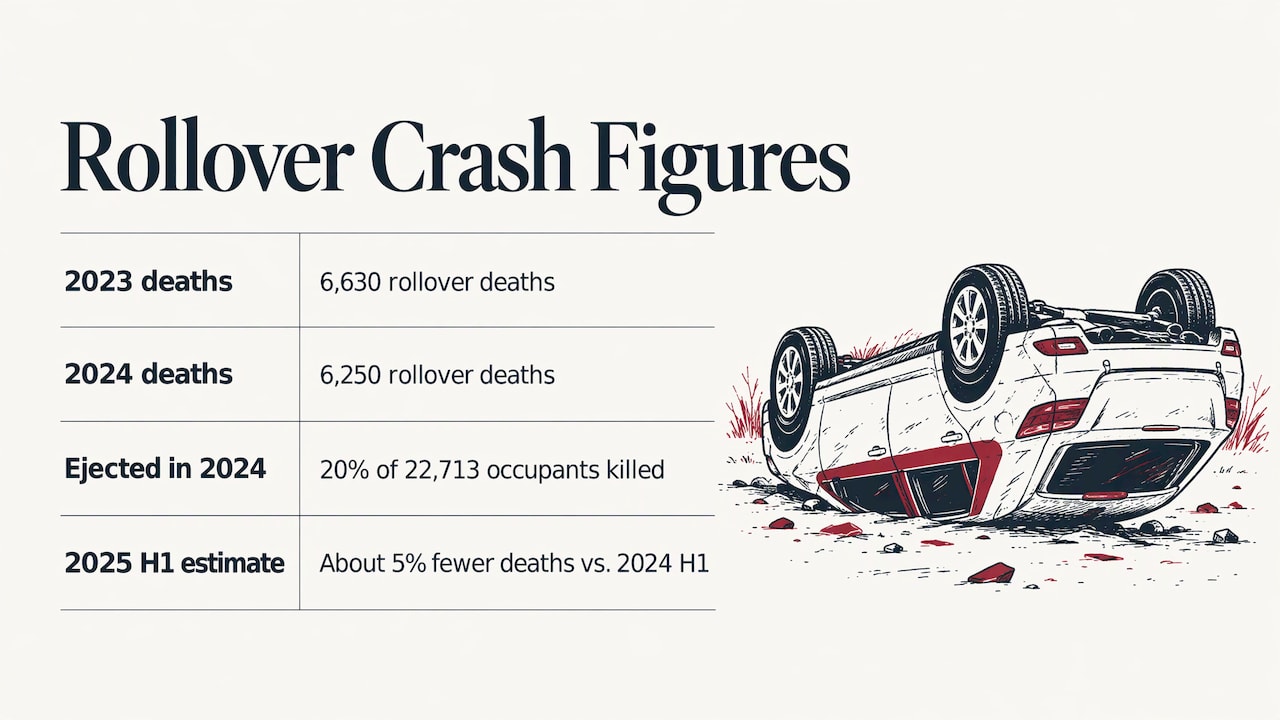
NHTSA’s early estimate for the first half of 2025 also pointed to about a 5 percent decrease in rollover deaths among passenger vehicle occupants compared with the first half of 2024. Early estimates are not final counts, so treat them as a direction, not a fixed number.
For anyone who survives, the injuries are often severe: traumatic brain injuries, spinal cord damage, crush injuries, broken bones and burns. Many need months or years of treatment. That is why a rollover claim should never be valued on the emergency room bill alone. If your injury involved a head impact or lasting cognitive changes, see our page on traumatic brain injury claims.
What causes a rollover
The cause of the rollover is the starting point for the claim, because it points to who may be responsible. Common causes include:
- A driver’s mistake. Speeding, drifting off the road, sudden swerving to avoid another car, distracted driving, or driving while impaired.
- A collision with another vehicle. A car clipping the side of a taller vehicle, or a truck forcing another driver off the road.
- Tire failure. A blowout on the highway can cause a driver to lose control.
- Vehicle design or defects. Some vehicles, especially those with a higher center of gravity, are more prone to tipping.
- Road conditions. Soft shoulders, steep drop-offs, missing guardrails, debris or poor drainage.
- Wet or icy pavement combined with speed too fast for conditions.
Vehicle design matters. A peer-reviewed study of SUV crashes found that SUVs with electronic stability control were about two-thirds less likely to roll over in single-vehicle crashes, and that SUVs with a higher Static Stability Factor were significantly less likely to roll. The same study found the rollover rate for SUVs in single-vehicle crashes dropped from 25.3 percent in model year 2001 to 11.5 percent in model year 2006. In plain terms: how a vehicle is built can affect whether it flips, and that can matter in a claim when a design or manufacturing problem is involved.
Who may be legally responsible
Many people assume a rollover is automatically the driver’s fault, particularly when no other car touched the vehicle. In reality, a one-vehicle rollover can still involve outside responsibility. Possible parties include:
- Another driver who caused the crash by cutting you off, tailgating, or forcing you off the road, even if the cars never made contact.
- A commercial truck driver or trucking company. Large trucks create the kind of sudden evasive moves that lead to rollovers. If a truck was involved, our guides on who is liable for a trucking accident and recovering your losses after a truck crash explain the parties that may be involved, and our truck accident practice handles these claims.
- A vehicle or tire manufacturer when a defect, a failed roof, a faulty seat belt or a tire that came apart contributed to the crash or to the severity of your injuries.
- A government agency or contractor responsible for the road, where a hazard such as a drop-off or missing barrier played a part. Claims against public bodies often carry their own notice rules, which is one more reason to act early.
- A vehicle owner or employer who let an unsafe or impaired driver use the vehicle or who is responsible for a driver working on the job.
If a drunk driver was involved, the claim may also look different. Our page on a drunk driver accident attorney covers that situation. For a broader view of how fault and compensation connect, read who is liable in a personal injury case.
Why fault arguments matter in Virginia
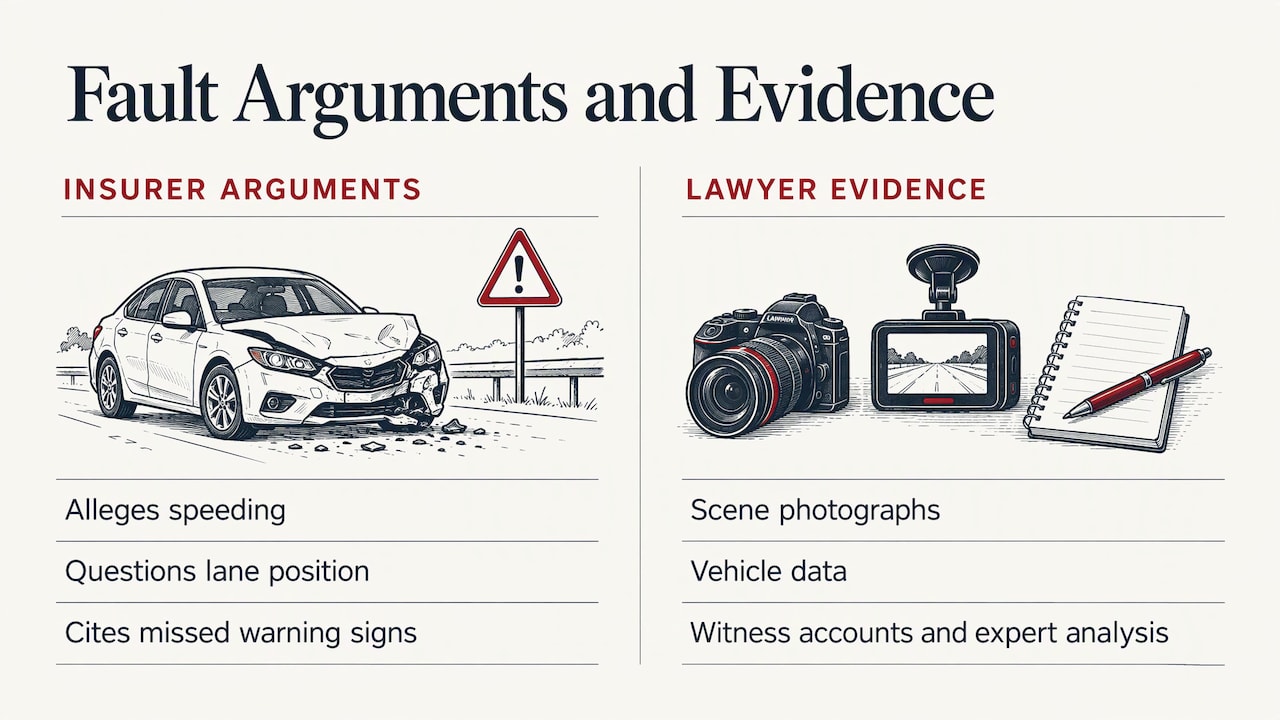
Insurance companies often argue that the injured person caused or contributed to the crash. In Virginia, an argument that you were partly at fault can seriously damage a claim, which is why the early record matters. An adjuster may point to speed, lane position or a missed warning sign. A lawyer’s job is to answer those arguments with evidence: scene photographs, vehicle data, witness accounts and expert analysis.
What compensation may cover
Compensation in a rollover case is meant to address the real cost of the crash to your life. Depending on the facts, you may seek:
- Medical expenses, past and future: emergency care, surgery, hospital stays, rehabilitation, medication, assistive equipment and home modifications.
- Lost income while you cannot work, and reduced earning capacity if you cannot return to the same job.
- Pain and suffering, including the loss of enjoyment of daily life.
- Property damage, including the vehicle. Our vehicle damage guide explains how that part of a claim works.
- Wrongful death damages for families who have lost someone. See our wrongful death practice for how those claims are handled.
What affects the amount? The severity and permanence of the injuries, the length of treatment, your age and work, the available insurance coverage, the strength of the evidence and how fault is assigned. A worked example shows why timing matters: a driver whose SUV rolls and who is diagnosed with a spinal injury may face surgery, months of therapy and a permanent change in work capacity. If the claim is settled at the first offer, before the treating doctors can describe the long-term outlook, the settlement may cover only a fraction of the real cost. A careful lawyer waits until the medical picture is clear, then values the whole claim.
No lawyer can promise a particular result. What a lawyer can do is build the claim so that the number the insurer sees reflects your full losses.
The deadline: two years in Virginia
Virginia law states that every action for personal injuries must be brought within two years after the cause of action accrues. For most crash victims, the clock starts on the day of the crash. Missing the deadline can end your right to recover, however strong the claim.
Two years sounds long, but rollover cases take time to prepare. Vehicles get repaired or sold for salvage, data is overwritten and witnesses move away. Different deadlines can apply to wrongful death claims and to claims against government bodies, so confirm the timeline for your situation with an attorney early. Our article on how long you have to file a personal injury claim in Virginia goes through the rules in more detail.
What to do after a rollover or highway crash
The days after a serious crash are chaotic. These steps protect both your health and your claim.
- Get medical care immediately. Call 911 if you can. Some serious injuries, including head and spinal injuries, do not show full symptoms right away. Medical records also create the link between the crash and your injuries.
- Report the crash to police and get the report number.
- Document the scene if you are able, or ask someone to: the vehicle’s final position, skid marks, damage, road conditions, signs, weather and any hazards.
- Collect names and contact details for witnesses and other drivers.
- Keep the vehicle and its parts. The vehicle, tires, seat belts and airbags can be the most important evidence in a rollover case. Do not let it be crushed, sold or repaired until it has been inspected. Tell the tow yard and your insurer not to dispose of it.
- Keep a record of everything. Save medical bills, pay stubs, receipts, and write down your symptoms and how the injuries affect your daily life.
- Be careful with insurers. Report the crash to your own insurer as your policy requires, but do not give a recorded statement to the other side’s insurer or sign a release before you have spoken with an attorney.
- Follow your treatment plan. Gaps in treatment are used to argue that your injuries were not serious.
Where a lawyer takes the weight off you
Several of these steps are hard to do while you are recovering. When you hire our firm, our attorneys work on the evidence and insurer communications so you can focus on treatment. We write to the parties holding key evidence, and we handle negotiation with the insurance companies. You also have direct access to your attorney, so questions do not go unanswered.
What a rollover accident lawyer does
A lawyer who handles these cases will typically:
- Investigate the cause of the crash and identify every responsible party.
- Work to preserve the vehicle, the data it holds and the scene evidence.
- Gather medical records and work with your treating doctors to document current and future needs.
- Calculate your full losses, including future care and lost earning capacity.
- Handle all communication and negotiation with the insurance companies.
- Prepare the case for court if a fair settlement is not offered.
Williams DeLoatche, P.C. is a personal injury firm serving clients throughout Virginia. Our approach combines skilled negotiation with compassionate representation, and we build a strategy around your individual needs. Our firm earns its fee through contingency fees from settlements and verdicts, so the fee comes from the compensation recovered for you.
Choosing a rollover or highway accident attorney
When you compare firms, look at the things that affect how your case will be handled:
- Experience with serious injury cases. Rollover claims are rarely simple. Ask about the firm’s record with catastrophic injuries and large motor vehicle claims.
- Access to your attorney. You should be able to reach the lawyer handling your case, not only a rotating staff.
- A plan specific to you. Your claim should be built around your medical future and your work and family, not a standard script.
- Clear communication. You should understand what is happening, what the next step is and why.
- Local knowledge. Virginia courts, insurers and roads differ from other states.
Our firm gives you direct attorney access and a strategy tailored to your case. We serve clients across Virginia, including Hampton Roads, the Eastern Shore and the Roanoke area. For crashes in the Portsmouth area, see our page for accident lawyers in Portsmouth.
Talk with our attorneys about your rollover claim
If you were injured in a rollover or a highway crash, our attorneys can review what happened, explain your options and begin protecting the evidence. We handle car accident, truck and motorcycle cases, as well as claims involving other serious injuries. You can see everything we handle on our practice areas page, or contact the firm through wd-law.com to speak with an attorney.

If the person hurt was an older family member, our guide on legal protections for seniors after accidents explains issues that can affect their claim. For a wider overview of serious injuries and recovery, see our serious injury guide.
FAQ
How long do I have to file a rollover accident claim in Virginia?
Virginia law sets a two-year deadline for personal injury actions from the time the cause of action accrues. Wrongful death claims and claims against government bodies can follow different rules, so speak with an attorney promptly about your situation.
Can I have a claim if I was the only vehicle in the crash?
Yes, it is possible. A single-vehicle rollover can still involve another driver who forced you off the road, a vehicle or tire defect, or a road hazard. An attorney can review the evidence to see whether anyone other than the driver is responsible.
What if the rollover involved a commercial truck?
Truck crashes can involve the driver, the carrier and others, and they often have more insurance coverage and more complex evidence. Our recovering maximum compensation after a truck crash guide explains what these claims involve.
Should I talk to the other driver’s insurance company?
You should report the crash to your own insurer as your policy requires. Before you give a recorded statement to the other side’s insurer or accept any offer, speak with an attorney, because early statements and quick settlements can limit what you recover.
What should I keep after the crash?
Keep the vehicle and its parts, photographs, the police report number, medical records and bills, pay records, and a daily note of your symptoms. These items show what happened and what it has cost you.
Sources
- NHTSA, Traffic Safety Facts Research Note: Overview of Motor Vehicle Traffic Crashes in 2024
- NHTSA, Early Estimates of Motor Vehicle Traffic Fatalities, January–June 2025
- PubMed Central, SUV rollover in single vehicle crashes and the influence of electronic stability control
- Code of Virginia, § 8.01-243, Personal action for injury to person or property
Recommended

Direct Access.
Real Results.